From the Warehouse Floor to the Boardroom: The Logistics Terms Marketing Borrowed and Never Gave Back

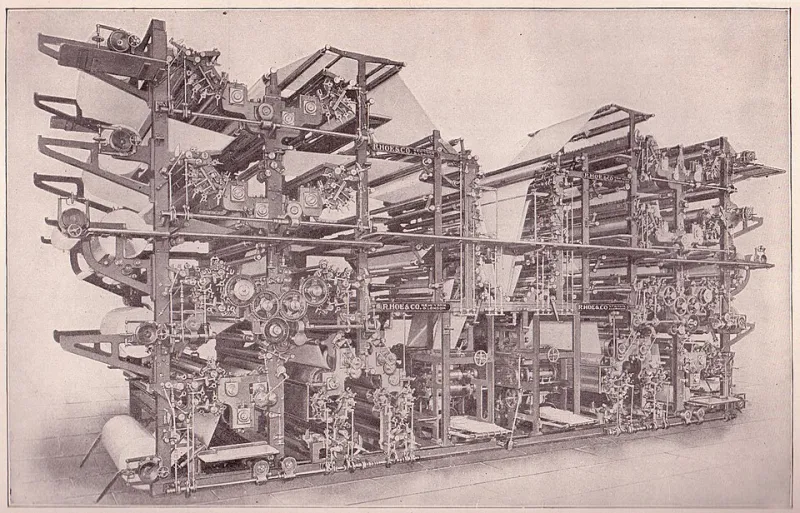
Photo: Excel23, CC BY-SA 4.0, via Wikimedia Commons
Marketing has always been a borrowing discipline. It took psychology from the lab, statistics from economics, and storytelling from Hollywood. Less obvious, however, is how much of the modern marketing lexicon was wheeled in on a pallet from the warehouse.
As e-commerce collapsed the distance between the advertising department and the distribution center, logistics vocabulary crossed over into marketing speak. Terms that once described forklift traffic and dock schedules now headline strategy decks. Below, each borrowed term is paired with its original operational definition and a note on what shifts when it's used metaphorically.
Fulfillment
Original meaning: In warehousing, order fulfillment is the complete operational sequence of receiving inventory, picking, packing, and shipping a customer's order accurately and on time. It is measured in error rates and cycle times, not sentiment.
Marketing usage: Marketers now speak of "fulfilling a customer need" or "brand fulfillment" — the degree to which the product experience delivers on the promise the advertising made.
What changes in translation: The metaphor is useful because it preserves the core idea of a promise kept. What gets lost is the operational discipline. Fulfillment in the warehouse is binary — the right item arrived or it didn't. Marketing fulfillment is a matter of degree, which lets teams use the word aspirationally without any measurable standard attached.
Throughput
Original meaning: Throughput is the rate at which a system produces output — units processed per hour on a packaging line, orders shipped per day from a distribution center. It is a hard, countable number constrained by the slowest step in the operation.
Marketing usage: "Content throughput" and "campaign throughput" describe how much material a team can produce and ship in a given period.
What changes in translation: The borrowed term imports a valuable concept from operations science: the bottleneck. When a marketing team says throughput, it implicitly acknowledges that output is limited by the slowest stage — often review cycles or legal approval, not creative capacity. The risk is volume worship. A warehouse can ship more units without those units being worse products; a content team that maximizes throughput often ships worse work.
Shelf Space
Original meaning: In brick-and-mortar retail, shelf space is literal, finite real estate. Manufacturers negotiate slotting fees with retailers like Walmart and Kroger to secure eye-level placement, knowing visibility drives velocity.
Marketing usage: "Digital shelf space" now refers to search engine results, app store rankings, and Amazon product listings. "Winning the shelf" means ranking prominently where purchase decisions happen.
What changes in translation: The metaphor gains something important: it reminds digital marketers that rankings are contested, rented, and revocable, just like a slotting agreement. What it obscures is that digital shelf space is effectively infinite in supply but scarce in attention — the constraint moved from physical square footage to the top three results on a page.
Last Mile
Original meaning: The last mile is the final leg of delivery from a regional hub to the customer's doorstep — historically the most expensive and least efficient segment of the logistics chain, sometimes accounting for more than half of total shipping cost.
Marketing usage: Marketers use "last mile" for the final step of any customer journey: the checkout page, the onboarding email, the moment a lead converts.
What changes in translation: The borrowing is mostly faithful — both usages describe a short final stretch that is disproportionately difficult. But the metaphor drops the cost accounting. In logistics, the last mile is a cost-center problem demanding engineering solutions like route optimization and pickup lockers. In marketing, "last mile" often becomes a vague synonym for "the end," stripped of the urgency the original term carries.
Lead Time
Original meaning: Lead time is the elapsed time between initiating a process and its completion — the weeks between placing a purchase order with a supplier and receiving the goods.
Marketing usage: Creative lead time, campaign lead time, and media lead time all describe the buffer required before launch.
What changes in translation: Little is lost here; the term transferred almost intact. If anything, marketing gained precision, because advertising teams historically planned around air dates and print deadlines without a standard word for the gap between commitment and execution.
Pick and Pack
Original meaning: The warehouse process of retrieving individual items (picking) and placing them into a shipping carton (packing), typically the labor-intensive heart of e-commerce fulfillment.
Marketing usage: Rarely used literally by marketers, "picking and packing" occasionally appears in agency slang for assembling deliverables from existing components rather than creating original work.
What changes in translation: The metaphorical use is mildly pejorative — it implies assembly rather than creation. Warehouse workers would object to the connotation; pick and pack is skilled, speed-critical labor.
Why the Borrowing Happened
Three forces pushed warehouse language into the marketing vocabulary. First, Amazon normalized the idea that the advertisement and the delivery are one continuous customer experience, forcing marketers to care about operations. Second, direct-to-consumer brands staffed their marketing teams with people who had stood in their own fulfillment centers. Third, performance marketing demanded countable, operational language — and logistics had spent a century perfecting it.
A Usage Note for Professionals
Borrowed operational terms are most credible when marketers honor their original precision. If you claim to manage throughput, be prepared to name your bottleneck. If you promise fulfillment, define the standard a customer could use to verify it. The warehouse taught marketing a useful lesson hidden inside its vocabulary: in operations, every word is attached to a number.